New Publication: An Automatic Driver Assistant based on Intention Detecting Using EEG Signal
In short: a driver assistant that reads motor intention straight off the scalp. Sixteen channels of OpenBCI, common spatial patterns for features, an SVM to sort them into left, right and brake.…
- published
- read time
- 1 min
- words
- 255
- lang
- en
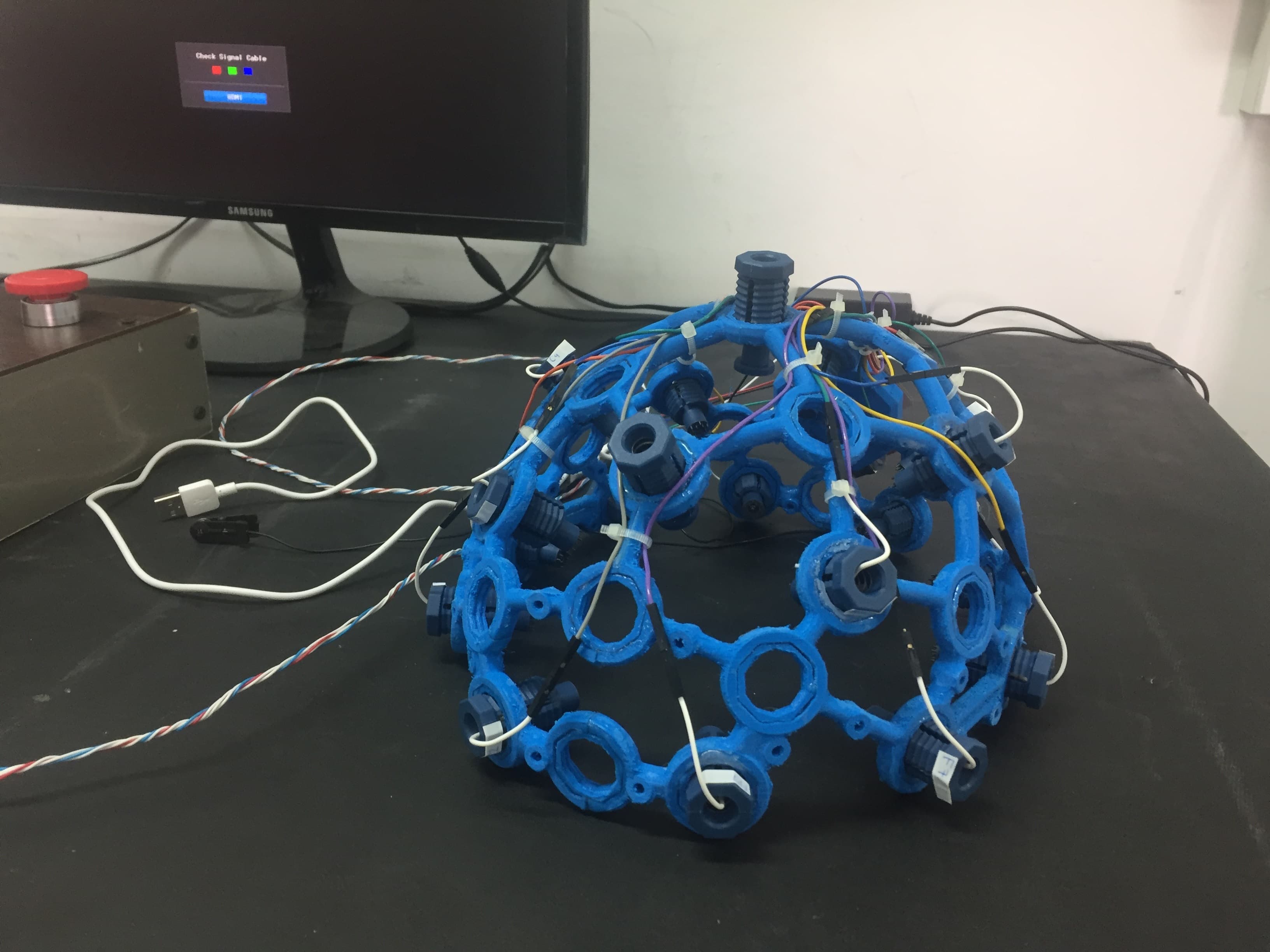
In short: a driver assistant that reads motor intention straight off the scalp. Sixteen channels of OpenBCI, common spatial patterns for features, an SVM to sort them into left, right and brake. Published at the NUSYS'19 conference.
Abstract
Each year, vehicle safety is increasing. Recently brain signals were used to assist drivers. Attempting to do movement produces electrical signals in specific regions of the brain. We developed a system based on motor intention to assist drivers and prevent car accidents. The main objective of this work is improving reaction time to external hazards. The motor intention was recorded by 16 channels of a portable device called Open-BCI. Extracting features was done by common spatial patterns which is a well-known method in motor imagery based brain computer interface (BCI) systems. By using enhanced common spatial pattern (CSP) called strong uncorrelated transform complex common spatial pattern (SUTCCSP), features of preprocessed data were extracted. Regarding the nonlinear nature of electroencephalogram (EEG), support vector machine (SVM) with kernel trick classifier was used to classify features into 3 classes: left, right and brake. Due to using developed SVM, commands can be predicted 500ms earlier with the system accuracy of 94.6% on average.
Keywords: intentional EEG, driving assistant.
At the University of Tabriz we were working to take this from a lab setup toward something you could actually put in a car.
Read the paper on SpringerLink. It appears in LNEE 2019 and on the IEEE website.
related